Function Of Sa Node And Av Node
Without the gatekeeping function of the AV node the ventricles can conduct up to the rate of the atrium which is particularly dangerous in SVTs. Hypoxia decreased the amplitude of action potentials of the SA node and of the AV node but not of the atrium.
Tel Archives Ouvertes Fr
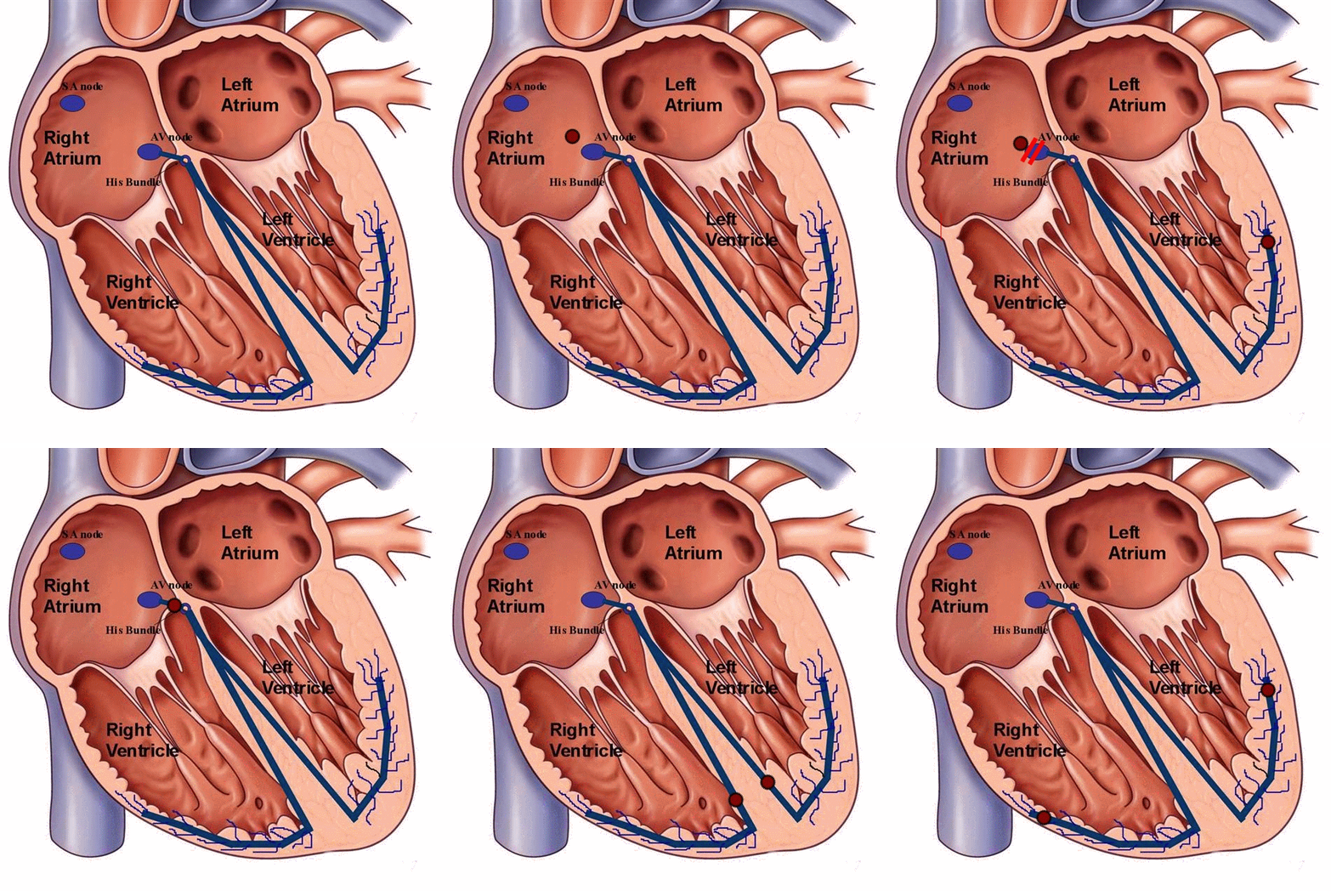
Although the SA node is the natural pacemaker causing the heart to beat at a rate of 60-100 bpm normally if this fails the others can take up this work usually the AV node then the Purkinje system and Bundle branches.
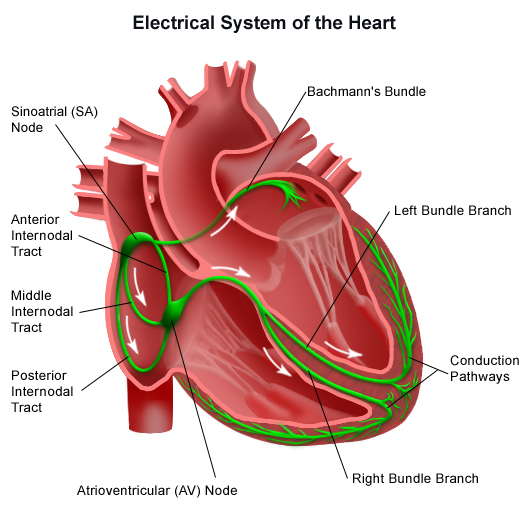
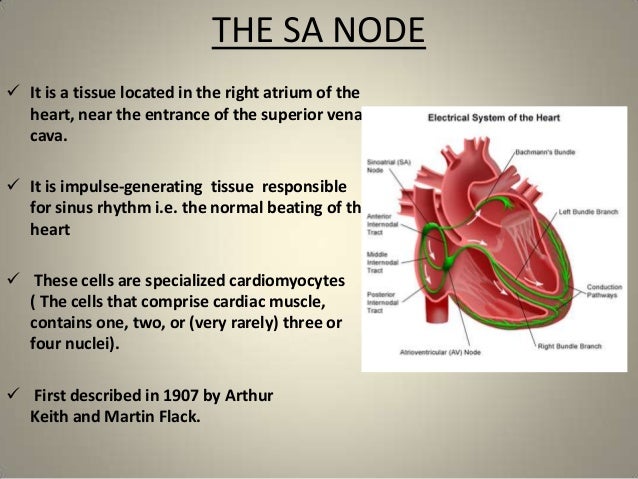
Function of sa node and av node. The sinus node is also called the sinoatrial node or for short the SA node. The SA nodes beats the fastest followed by the others as said. The SA node generates cardiac action potential due to spontaneous depolarization by the pace maker cells.
Without this electrical signal the heart would be. This delay ensures that the atria have a chance to fully contract before the ventricles are stimulated. The SA node sends another signal to the atria to contract which starts the cycle over again.
Disorders of the AV node can produce either tachycardia or bradycardia. The main function of the SA node is to act as the normal pacemaker of the heart. Electrophysiologic testing was performed both during basal state and after autonomic blockade with propranolol and atropine.
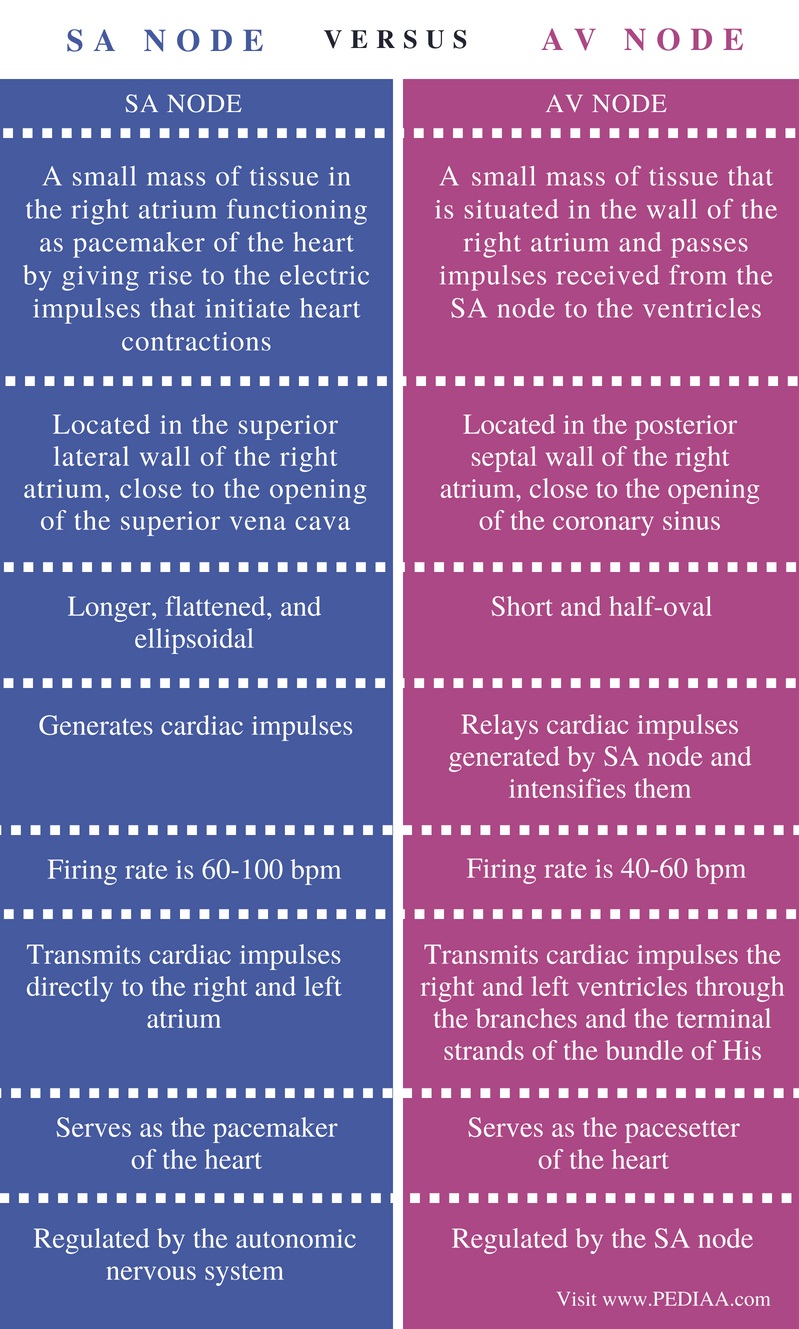
The SA node and AV node are two main nodes present in the human heart. SA node and AV node are the major parts of the contractile system of the heart. In the absence of a functioning SA node the AV node has the ability to take over as the pacemaker of the heart.
For this reason the SA node is the primary pacemaker. After passing the AV node the electrical current travels to the ventricles along special fibers embedded in the walls of the lower part. Conducting system of a heart is the system of some component that forms an electrical conducting system this system gets electrical impulses from Pace Maker and passes it on to the entire heart the function of the conducting system is to transmit the impulse to maintain the contraction of the heart.
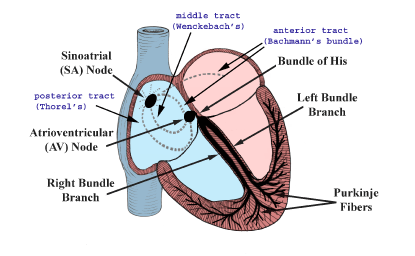
The middle internodal tract leaves the dorsal and posterior margins of the sinus node and courses behind the superior vena cava through the sinus intercavarum. The sinoatrial node also known as the sinuatrial node SA node or sinus node is a group of cells known as pacemaker cells located in the wall of the right atrium of the heart. The upper heart chambers atria contract.
When the impulse spreads over the right atrium it reaches the atrio-ventricular AV node. The electrical stimulus travels down through the conduction pathways and causes. Intraatrial conduction was not significantly affected.
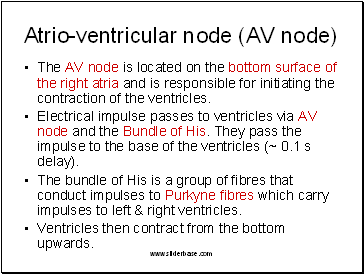
The AV node is also responsible for slowing down the passage of the electrical impulse traveling to the ventricles. The sinoatrial SA node is the pacemaker of the heart. The atrioventricular node also known as the AV node is responsible for transmitting electrical signals to the ventricles to make them contract.
Unlike atrial and ventricular cells pacemaker cells in the sinus node do not have a resting phase. Upon reaching the atrioventricular AV node the signal is delayed. SA node and AV node are two elements of the cardiac conduction system that controls the heart rate.
It transmits the hearts electrical signal from the atrium to the ventricle optimizes the coordination of each heartbeat and if atrial fibrillation occurs protects the ventricles from being bombarded with a dangerous number of electrical signals. November 10 2021 Nora Recipe. The sinus node generates an electrical stimulus regularly 60 to 100 times per minute under normal conditions.
This important phenomenon allows more time for the. This delay allows atria to contract thereby emptying blood into the ventricles before ventricular contraction. It spreads throughout both the right and left atria causing them to contract evenly.
The SA node called the pacemaker of the heart sends out an electrical impulse. Inhomogeneity of SA and AV nodal impulse propagation often was. Recall that it also has P cells that are able to establish an albeit slower rhythm 40 to 60 beats per minute.
SA and AV nodal conduction were slowed by hypoxia. Full digitalization was achieved by intravenous administration of digoxin 002 mgkg given in three divided doses over a 24. The AV node is a very important part of the hearts electrical system.
In common terms the SA node act as the Pace maker and the AV node act as the Pace setter. The electrical signal generated by the sinus node moves from cell to cell down through the heart until it reaches the atrioventricular node AV node a cluster of cells situated in the center of the heart between the atria and ventricles. The wave of excitation spreads across the atria causing them to contract.
This sequence is because of the natural rate these tissues beat at. From the SA node the electrical impulse is relayed along the hearts conduction system. It is then conducted into the bundle of His down the interventricular septum.
The AV node serves as a gate that slows the electrical current before the signal is permitted to pass down through to the ventricles. The AV node involves the reception of the action potential from the SA node and passes it to the AV bundle. An electrical stimulus is generated by the sinus node also called the sinoatrial node or SA node.
The regulation of electrical signals by the AV node ensures that electrical impulses do not. AV nodal conduction block occurred at lower atrial rates and the effective refractory period of the AV node was prolonged. Since the SA node produces action potentials at much faster rate than the AV node the SA node depolarizes the pacemaker cells within the AV node before they have time to spontaneously depolarize.
The AV node sends an impulse into the ventricles. The effects of digoxin on sinus node and atrioventricular AV node function were studied in 18 patients mean age 536 years with normal intrinsic heart rates. An excitation signal an action potential is created by the sinoatrial SA node.
It initiates an action potential that results in an electrical impulse traveling through the hearts electrical conduction system to cause myocardial contraction. Instead these cells have pacemaker potential in which they begin to. The main difference between SA node and AV node is that the SA node generates cardiac impulses whereas the AV node relays and intensifies cardiac impulses.
These cells have the ability to spontaneously produce an electrical impulse action potential that travels through the electrical conduction system of the heart causing it to contract. AV node collects signals from SA nodeThe AV node serves as a gate that slows the electrical current before the signal is permitted to pass down through to the ventricles. WolffParkinsonWhite syndrome can be differentiated from AVNRT.
After passing the AV node the electrical. This is the central thesis that this review will attempt to establish. More than any other tissue in the heart apart from the atrioventricular node the SA node is a complex tissue and its function depends on this complexity.
An accessory or extra pathway known as the Bundle of Kent allows impulses from the sinoatrial SA node to bypass the AV node and cause excitation of the ventricles. SA node is the. The lower heart chambers ventricles contract or pump.
The SA node SA stands for sinoatrial is one of the major elements in the cardiac conduction system. When the impulses generated by the SA node reach the AV node they are delayed for about a tenth of a second. This is a small mass of specialized tissue located in the right upper chamber atria of the heart.
This delay ensures that the atria have a chance to fully contract before the ventricles are stimulated. The anterior internodal tract passes from the sinus node to sweep anterior to the superior vena cava into Bachmanns bundle where it divides to distribute to the left atrium and to curve back into the interatrial septum and descend to the A-V node. This is a very important structure in the heart because it is the only.
The AV node then sends the impulses down the atrioventricular bundle to the ventricles. From the study of the electrophysiology of single SA node cells in particular the pacemaking of the SA node is reasonably. The atria are then activated.
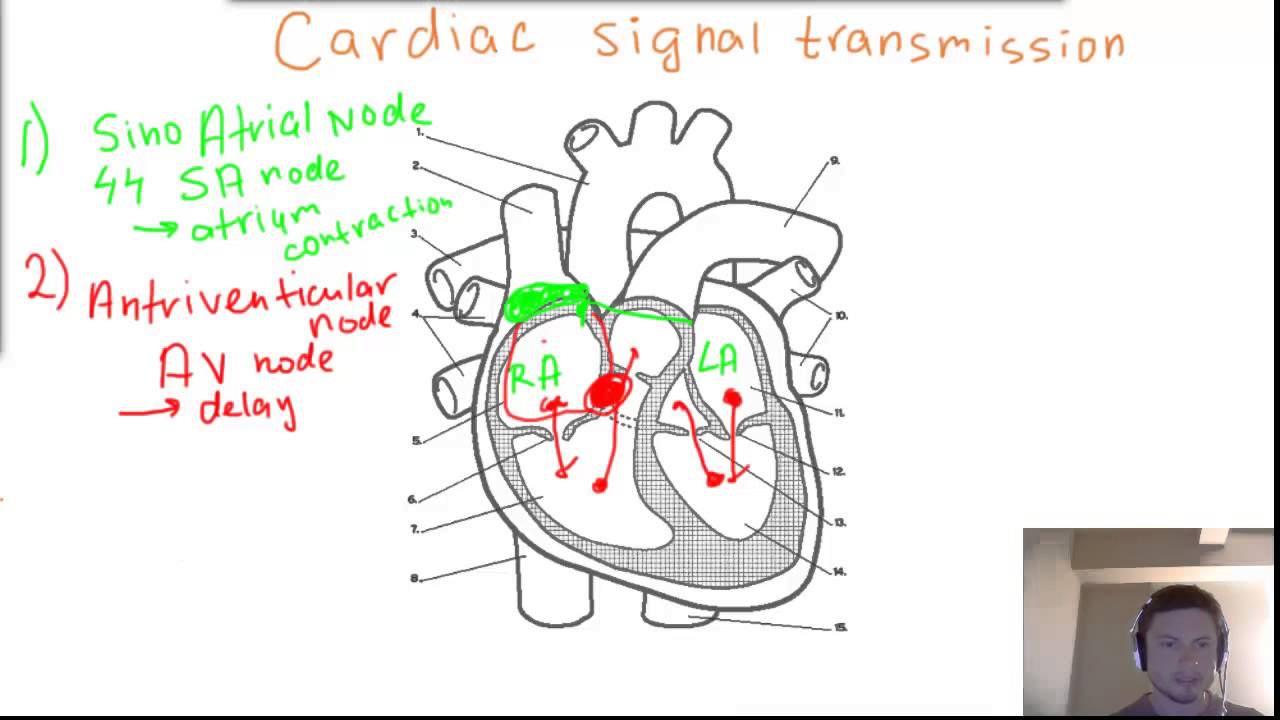
Cardiac Heart Signal Transmission Sa Node Av Node Bundles Of His And Purkinje Fibers Youtube
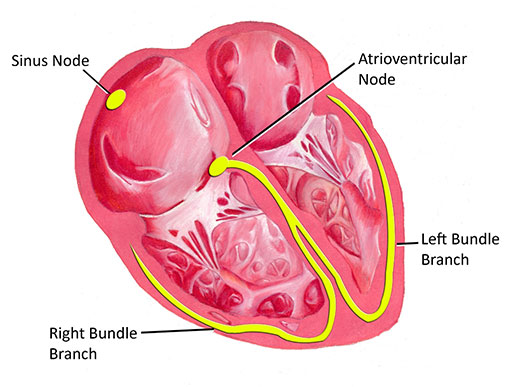
Av Node Pediatric Heart Specialists
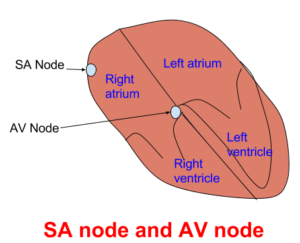
What Happens If The Sinoatrial Node Fails All About Heart And Blood Vessels
Heart S Pace Maker The Sinoatrial Node
Co Ordination Of The Cardiac Cycle Presentation Health And Disease
Treatment For Atrioventricular Av Block In Washington Dc Maryland
Difference Between Sa Node And Av Node


Perbedaan Antara Sa Node Dan Av Node Perbedaan Antara 2021
Conduction System Tutorial
Anatomy And Function Of The Heart S Electrical System Johns Hopkins Medicine
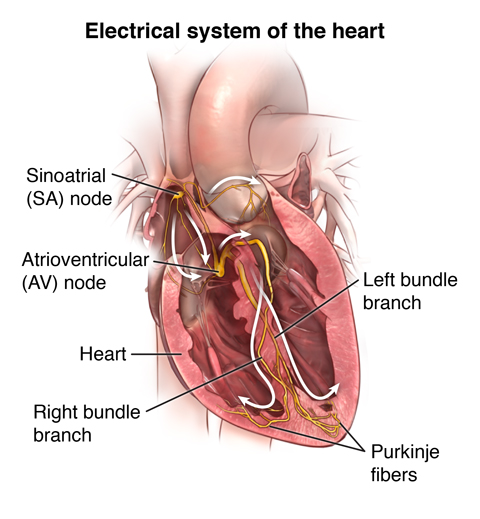
Anatomy And Function Of The Electrical System

The Electrical Cardiac Conduction System Sn Sinus Node Av Download Scientific Diagram

Physiology

Cv Physiology Normal Heart Rhythm
Difference Between Sa Node And Av Node Pediaa Com
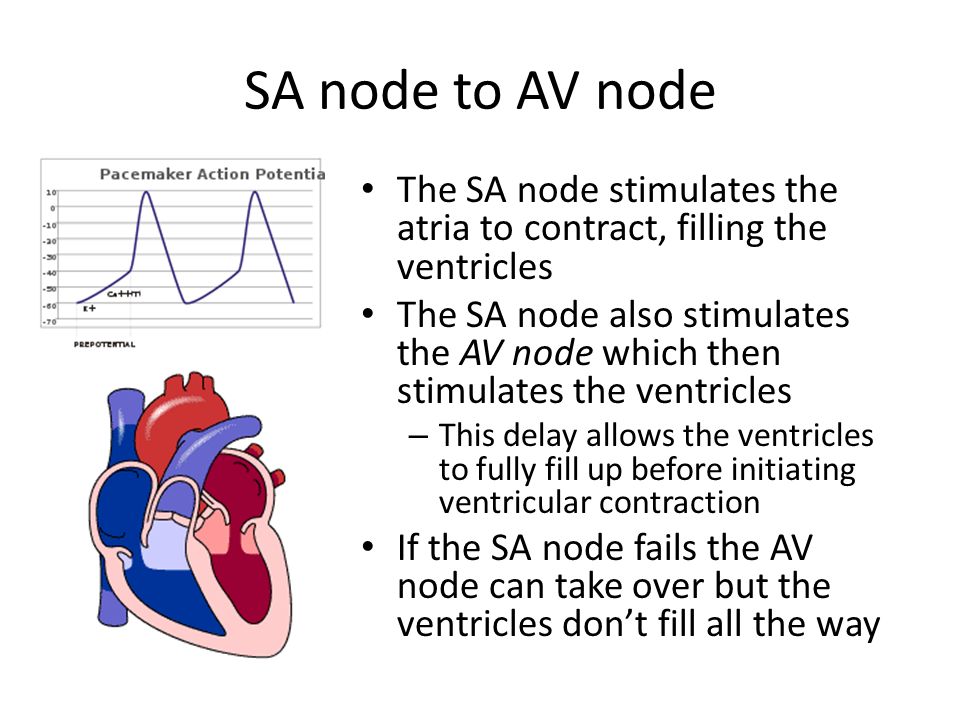
Heart Pt 2 Function Cardiac Cycle The Heart Goes Through The Cardiac Cycle To Contract And Pump Blood Through The Body Efficiently The Cycle Is Deemed Ppt Download
Natalies Casebook Tag
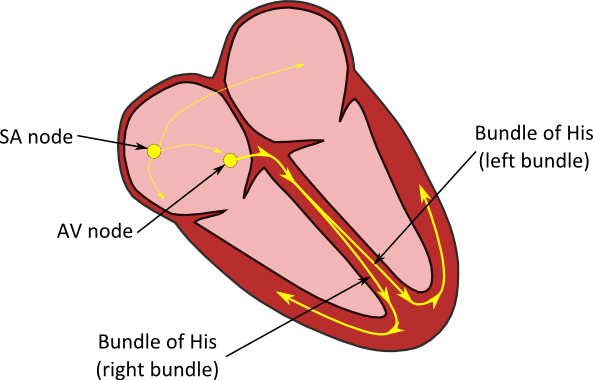
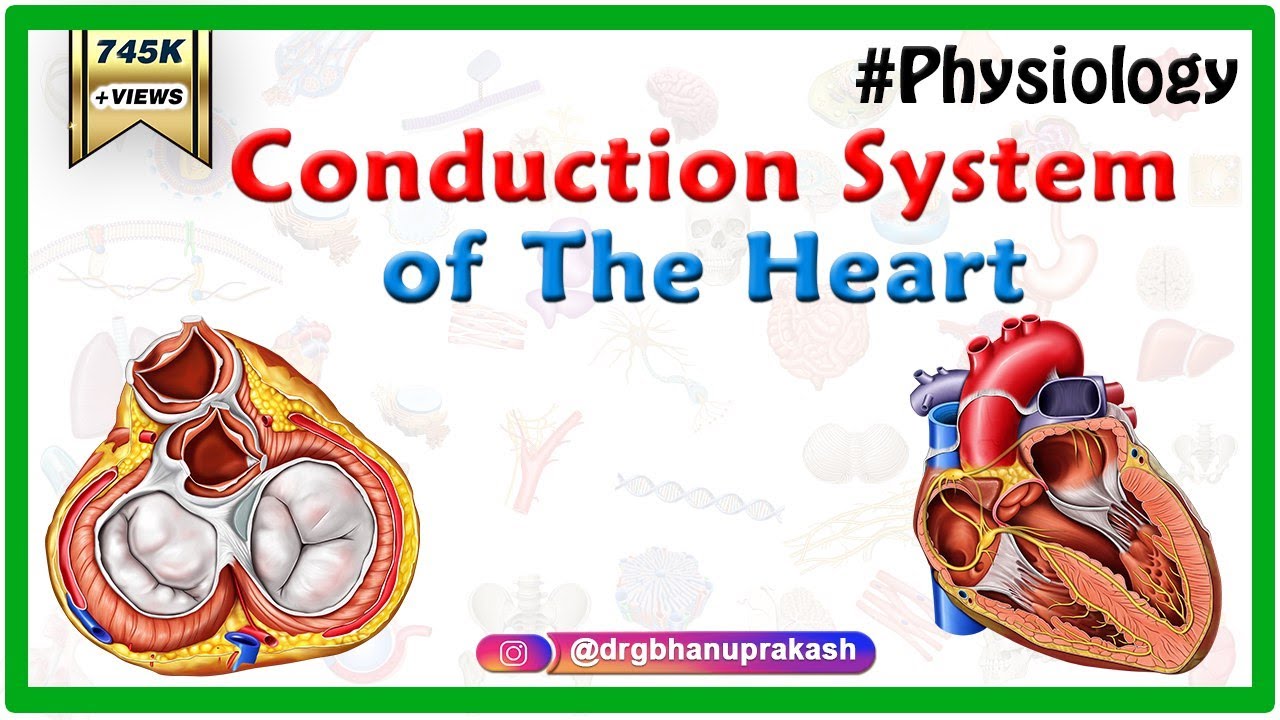
Conduction System Of The Heart Sinoatrial Node Av Node Bundle Of His Purkinje Fibers Animation Youtube

An Overview Of The Workings And Afflictions Of The Sa Node By Michelle White Medical Cps Medium


Posting Komentar untuk "Function Of Sa Node And Av Node"